
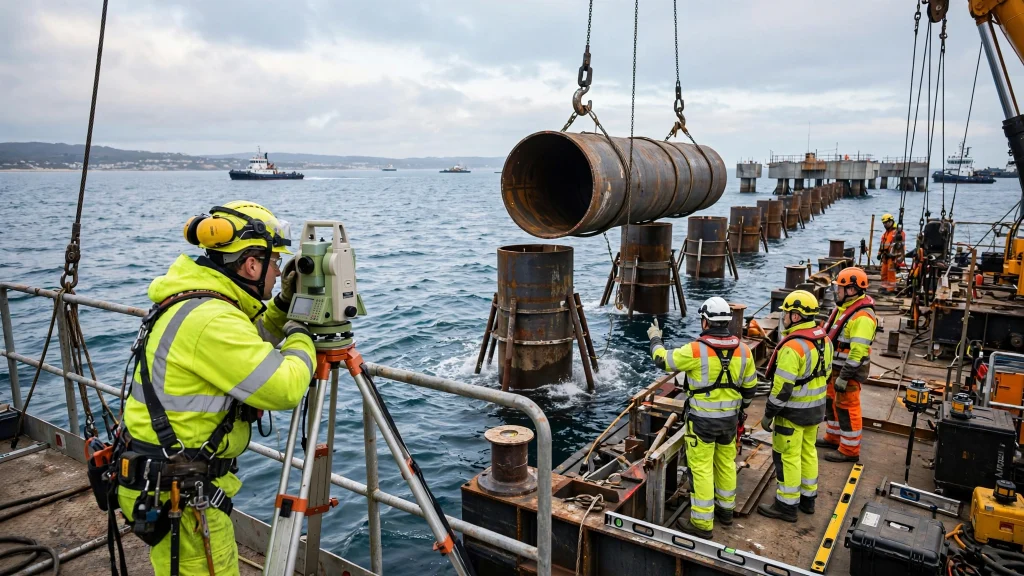
Marine Construction Projects demand exact planning, engineering, and execution because even minor mistakes can create costly delays, safety risks, and environmental damage. Every stage, from surveying to final inspection, depends on accurate measurements and reliable data. Precision helps contractors control costs, protect marine ecosystems, and deliver durable infrastructure.
Marine Construction Projects also face conditions that change daily. Waves, tides, currents, weather, and underwater visibility all affect construction quality. Engineers rely on advanced technology, skilled professionals, and strict quality control to reduce uncertainty. A precise approach supports long-term structural performance while meeting regulatory standards and project deadlines.
The Importance of Precision in Marine Construction Projects
Precision is the foundation of successful Marine Construction Projects. Marine environments create challenges that traditional construction sites rarely experience. Water movement, changing seabed conditions, and limited access increase the need for exact engineering.
Experienced marine engineers begin with hydrographic surveys, geotechnical investigations, and environmental assessments. These studies provide accurate information before construction starts. According to the American Society of Civil Engineers (ASCE), comprehensive site investigations significantly reduce project risks and unexpected costs during construction.
Accurate Planning Reduces Costly Errors
Early planning identifies potential obstacles before equipment reaches the site. Engineers analyze soil strength, water depth, tidal variations, and structural loads to create practical construction strategies.
Key planning activities include:
- Hydrographic surveying.
- Geotechnical testing.
- Environmental impact assessments.
- Structural modeling.
- Construction sequencing.
- Risk management planning.
These activities minimize redesigns, improve productivity, and reduce expensive delays throughout Marine Construction Projects.
Advanced Technology Improves Construction Accuracy
Modern Marine Construction Projects depend on technology that delivers highly accurate measurements. Digital tools reduce human error while improving project efficiency.
Global Navigation Satellite Systems (GNSS), multibeam sonar, drone inspections, LiDAR mapping, and Building Information Modeling (BIM) allow engineers to monitor every construction phase. Real-time positioning systems also help marine equipment maintain exact locations during installation.
Digital Tools Increase Project Reliability
Technology supports continuous monitoring throughout construction. Engineers compare live measurements with design models and quickly correct deviations before they become larger problems.
Benefits of modern technology include:
| Technology | Primary Purpose | Project Benefit |
|---|---|---|
| GNSS Positioning | Equipment navigation | Higher placement accuracy |
| Multibeam Sonar | Seabed mapping | Better foundation design |
| BIM | Digital project modeling | Improved collaboration |
| Drones | Visual inspections | Faster progress monitoring |
| LiDAR | Surface mapping | Precise measurements |
These technologies improve quality while reducing material waste and project downtime.
Precision Supports Structural Safety
Marine structures experience constant stress from waves, tides, vessel impacts, and corrosion. Precision ensures each structural component performs as designed throughout its service life.
Engineers carefully calculate load distribution, foundation stability, concrete strength, and steel reinforcement requirements. Small installation errors may create structural weaknesses that become expensive to repair later.
Quality Control Prevents Long-Term Failures
Successful contractors perform inspections during every construction phase instead of waiting until completion. Continuous verification confirms that every element meets engineering specifications.
Quality control commonly includes:
- Material testing.
- Dimensional verification.
- Underwater inspections.
- Weld inspections.
- Concrete strength testing.
- Structural alignment checks.
This disciplined process improves safety while extending the lifespan of marine infrastructure.
Environmental Protection Depends on Accurate Execution
Environmental compliance is a major priority in Marine Construction Projects. Coastal ecosystems contain sensitive habitats that require careful protection throughout construction.
Accurate dredging, pile installation, and sediment control reduce environmental disturbance. Engineers also monitor water quality, noise levels, and marine wildlife activity during construction.
Sustainable Practices Improve Project Outcomes
Many modern projects use environmentally responsible construction techniques. These methods protect natural resources while satisfying government regulations.
Common sustainability practices include:
- Sediment containment systems.
- Noise reduction technologies.
- Controlled dredging operations.
- Habitat restoration planning.
- Continuous environmental monitoring.
Environmental precision reduces regulatory risks while strengthening community confidence in marine development.
Skilled Teams Deliver Greater Precision
Technology alone cannot guarantee successful Marine Construction Projects. Experienced engineers, surveyors, divers, equipment operators, and inspectors play essential roles throughout every project stage.
Professional expertise allows teams to recognize changing site conditions and adjust construction methods safely. Experienced personnel also understand how environmental factors influence installation accuracy.
Collaboration Improves Decision-Making
Marine construction requires constant communication between designers, contractors, regulators, and environmental specialists. Clear coordination reduces misunderstandings and supports efficient project execution.
Industry experts recommend regular progress meetings, updated survey data, and detailed documentation throughout construction. Strong collaboration allows teams to resolve issues before they affect schedules or budgets.
Managing Risk Through Precise Execution
Risk management is an ongoing responsibility during Marine Construction Projects. Weather changes, equipment failures, and unexpected seabed conditions can disrupt operations without careful planning.
Project managers develop contingency plans supported by accurate data and continuous monitoring. Predictive maintenance, weather forecasting, and real-time reporting improve operational resilience while protecting workers and infrastructure.
Precision Creates Long-Term Value
Investing in precision may increase initial planning costs, but it produces measurable long-term savings. Accurate construction reduces maintenance expenses, extends asset life, and lowers operational risks.
Owners benefit from fewer repairs, improved structural reliability, and greater confidence that infrastructure will perform under demanding marine conditions for decades. Explore our latest insights in How Microtrenching Accelerates Modern Utility Installations
Conclusion
Precision remains the defining factor behind successful Marine Construction Projects. Accurate planning, advanced technology, experienced professionals, and rigorous quality control improve safety, reduce costs, and protect the environment. Organizations that prioritize precision consistently deliver stronger, longer-lasting marine infrastructure while meeting performance expectations and regulatory requirements.